
Paid leave
Paid leave and absences
Senegalese law on paid leave, public holidays and absences, turned into Odoo settings.
Translated from the French original. The screenshots show Odoo in French, as our Senegalese clients use it.
Introduction
The rules governing paid leave, and days off according to their reason, are not obvious in Senegal. What HR manager has not dreamed of an application that knows it all and helps handle staff leave requests? Where every employee could see, from their phone, how much paid leave they have left and book their dates directly? The HR manager's role would then be simply to approve or refuse the requests that arrive, in one click, confident that employment law is respected.
That is no longer a dream. With Odoo it is possible.
Knowing employment law
Before looking at how to put this in place in our favourite ERP through Odoo's Time Off module, here is a short extract from Senegalese regulation:
Chapter V: Paid leave and transport
Section 1: Paid leave
Article L. 148: Save for more favourable provisions in collective agreements, a worker earns the right to paid leave at the employer's expense at the rate of two working days per month of service.
That length increases with the worker's seniority in the company, according to the regulations in force or the provisions of collective agreements. Mothers are entitled to one extra day of leave per year for each child under 14 registered with the civil authorities.
Article L. 149: Service performed temporarily for the same employer outside the Republic of Senegal earns leave on the same terms. Within an annual limit of ten days, exceptional permissions granted to the worker for family events directly affecting their own household may not be deducted from the leave earned. Within a further annual limit of fifteen working days, not deductible from paid leave, unpaid leave of absence may be granted to allow the worker:
• either to attend an official training course in popular education or international sport;
• or to attend trade union congresses to which they are delegated under a proper mandate.
Within a further annual limit of 30 days, plus travelling time and not deductible from paid leave, a special additional regime of unpaid leave, with no limit on the number of occasions, may be established by decree for workers called by the competent administrative authority to take part in courses training sports officials, or in courses preparing for national sports selection.
Article L. 150: The right to take leave is earned after a minimum period of effective service, called the reference period, equal to 12 months. In every case, actually taking the leave may be deferred by agreement between the parties, provided the period of effective service does not exceed three years, and subject to six working days of leave that must be taken each year.
Article L. 151: Where the contract ends before the worker has earned the right to leave, or on expiry of the contract, compensation calculated on the rights earned under the above provisions must be granted in place of leave.
Pay for public holidays
Sick leave
Employees are also entitled to paid sick leave. The exact durations and compensation may be set out in collective agreements or individual contracts. Extended absences require a medical certificate. This too is covered by the Senegalese Labour Code.
Maternity leave
Employees are entitled to 14 weeks of paid maternity leave: 6 weeks before and 8 weeks after the birth. Compensation for that leave is paid by the social security system, under the Senegalese Labour Code.
ARTICLE 27: EXCEPTIONAL PERMISSIONS
Exceptional leave of absence is granted for the following family events:
Worker's marriage: 4 days;Marriage of the worker's child: 2 days;Marriage of a brother or sister: 1 day;Death of a spouse: 4 days;Death of a parent, brother or sister: 4 days;Death of a father-in-law, mother-in-law, brother-in-law or sister-in-law: 2 days;Birth of a child: 1 day;Christening of a child: 2 days;Hospitalisation of a spouse, descendant or ascendant: 1 day;Funeral of a spouse, descendant or ascendant: 1 day;First communion or confirmation: 1 day;Moving house: 1 day.
Setting the Time Off module up in Odoo
The Time Off module lets the HR manager enter all of this quickly.
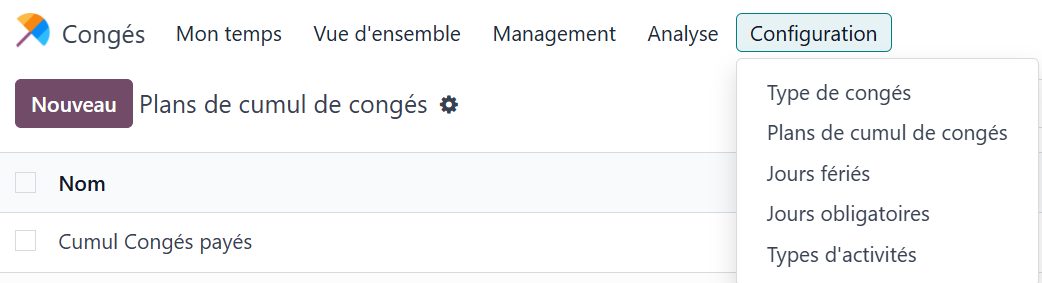
The public holiday calendar
The HR manager can keep the calendar of public and religious holidays up to date, ahead of time. It can be adjusted for the start and end of festivals tied to sighting the crescent moon, as often happens with Ramadan. Governments also grant extra holidays during the year, to ease the return from festivals in the regions. This calendar is not fixed.
Here, for example, are the public holidays for 2023 and for 2024:
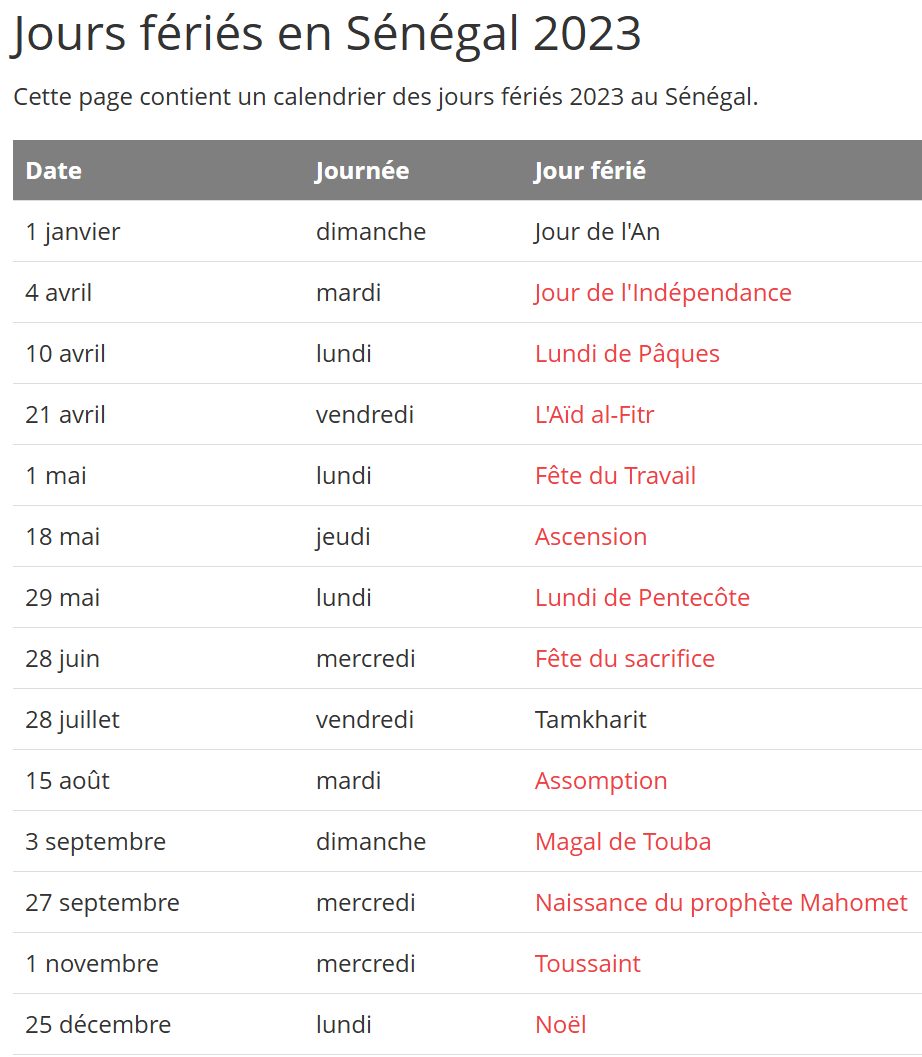
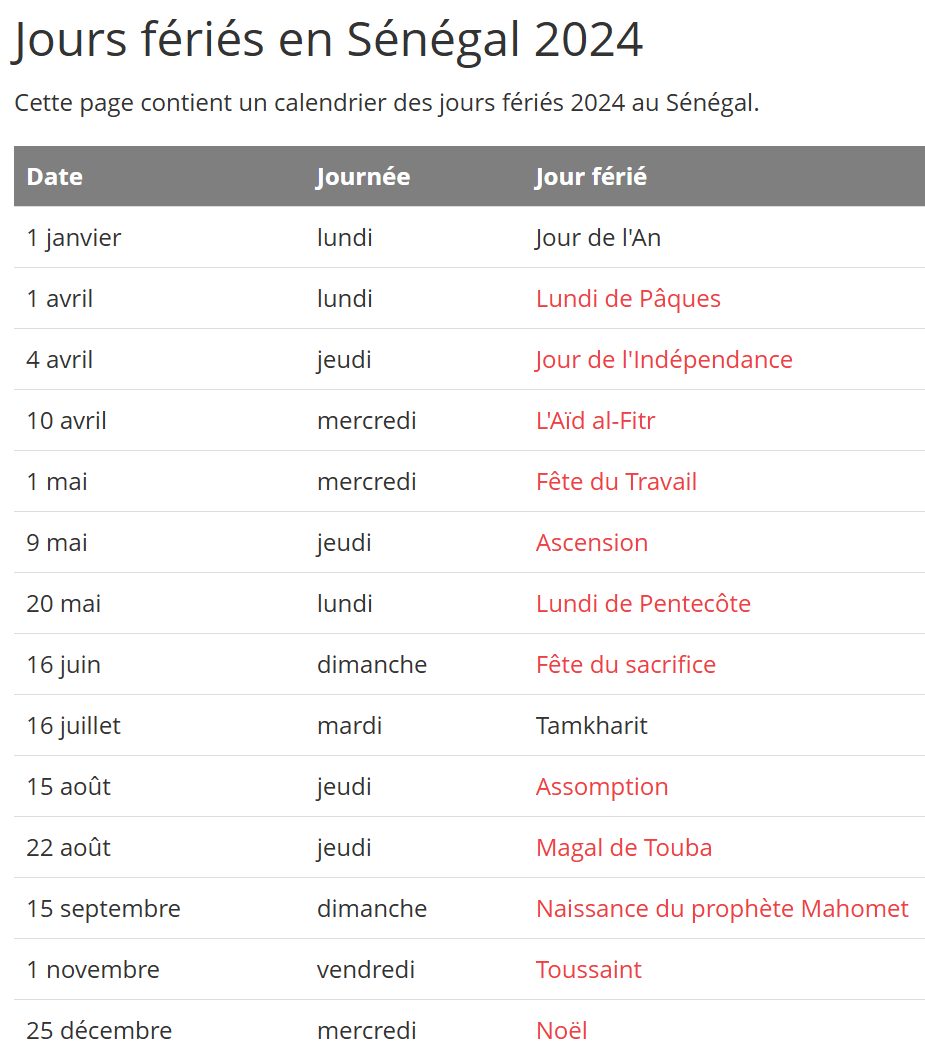
The calendar matters, because a public holiday falling inside a period of paid leave is not deducted from the balance. Odoo knows to allow for that.
Leave accrual plan
Another important setting in the Time Off module is the paid leave accrual plan, which tells Odoo how leave builds up according to a number of parameters. In the simplest case in the regulation, we saw that a worker is entitled to 2 extra days per full month worked.
Here is how that rule is set up in the module:
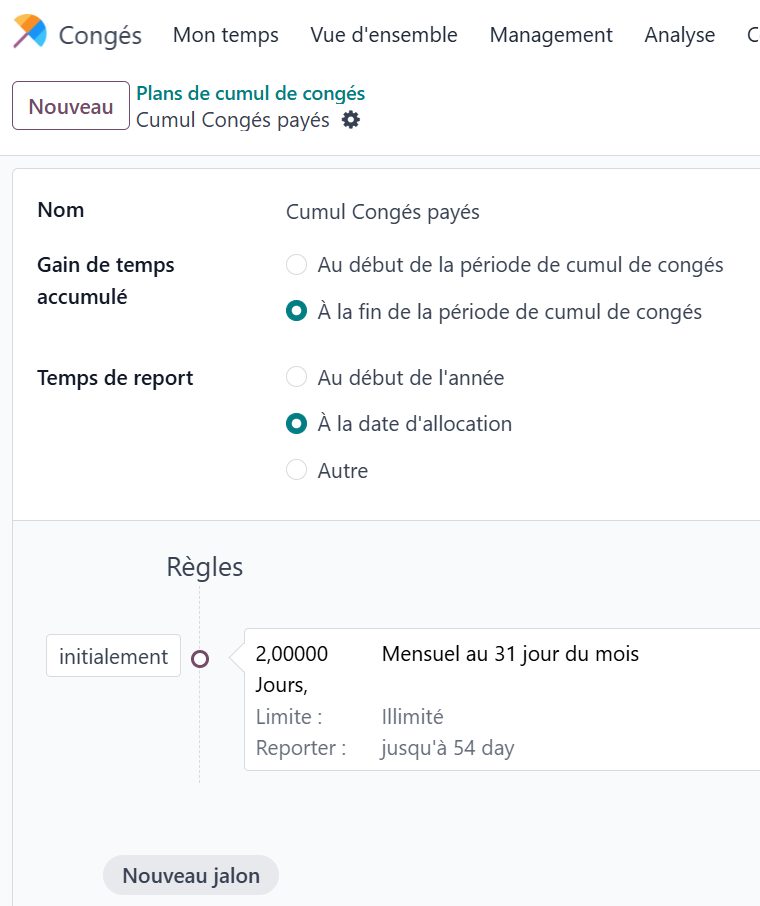
The accrual is granted at the end of the period, and 2 more days are added to the employee's credit on the last day of the month worked.
To put an employee on an accrual plan, you make them a leave allocation calculated so that their credit of days becomes available after the 12 months following their hire date. Days accrue during the first year but are only released on the anniversary of the contract start.
For an employee hired on 01/07/2024, for instance, the allocation starts the day before the anniversary — 30/06/2025 — so that the accrual Odoo computes comes to a full 24 days.
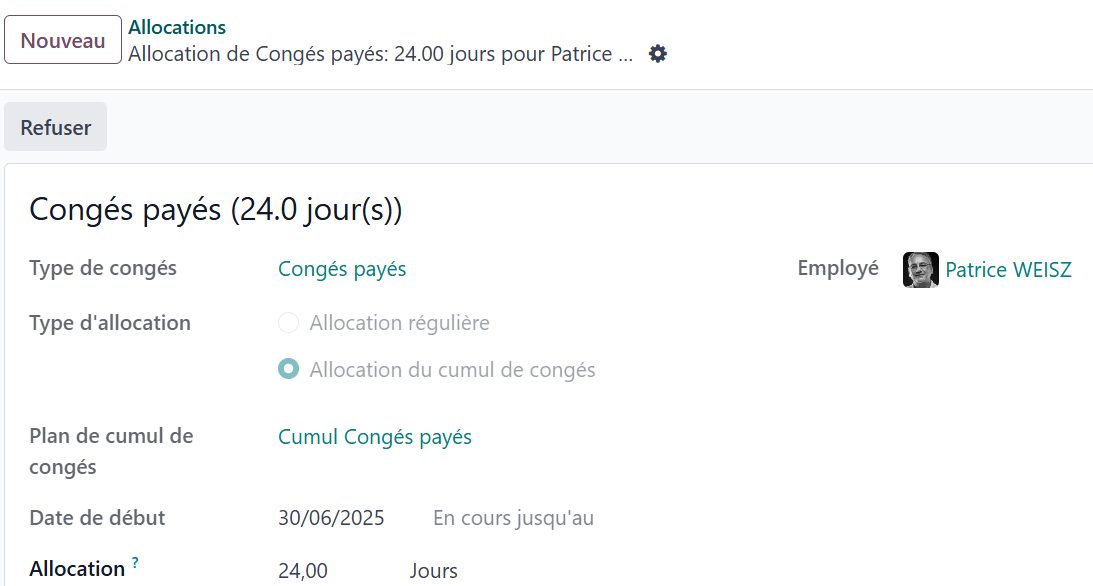
From the moment a leave allocation is available, because it has been accepted, the employee sees it appear on their calendar dashboard and can use it.
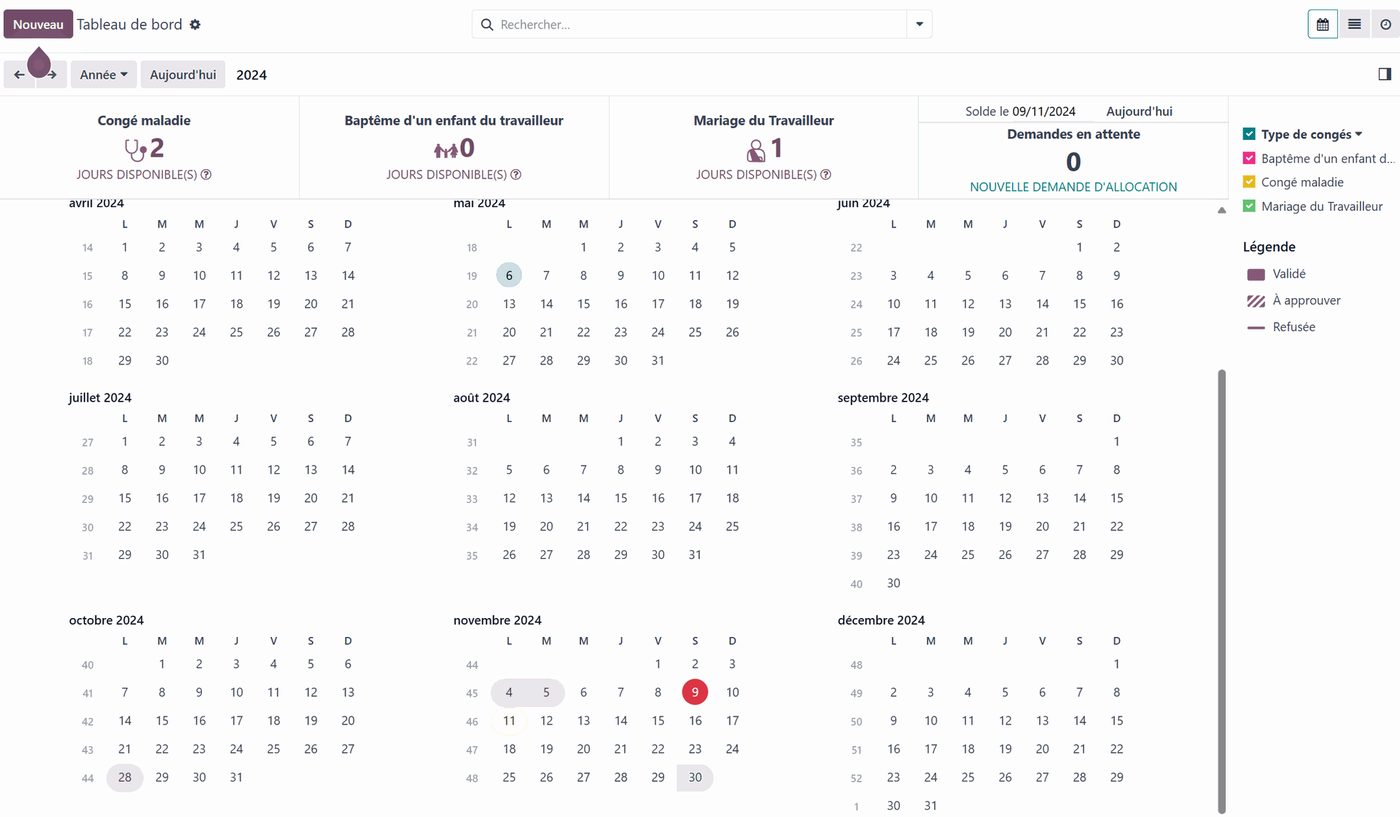
Here, moving to a current date after 01/07/2025, the paid leave balance of 24 days appears on screen. At an earlier date the accrual is hidden, because it is not yet available — still inside the first 12 months.
If the employee moves to a later date, the accrual grows by 2 days a month. That lets them work out in advance how many days of leave they will have for, say, the next holidays.

Allocating days of absence
As you will have gathered, for an employee to use their leave they need an allocation authorising it. The same goes for authorised absences. Suppose an employee is getting married and wants the 4 days the law allows to prepare for it.
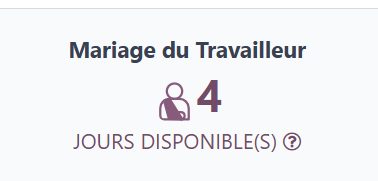
Either you let them request the allocation themselves from their dashboard, or the leave manager makes them an allocation of 4 days, which they can then book in part or in full in their calendar for approval.
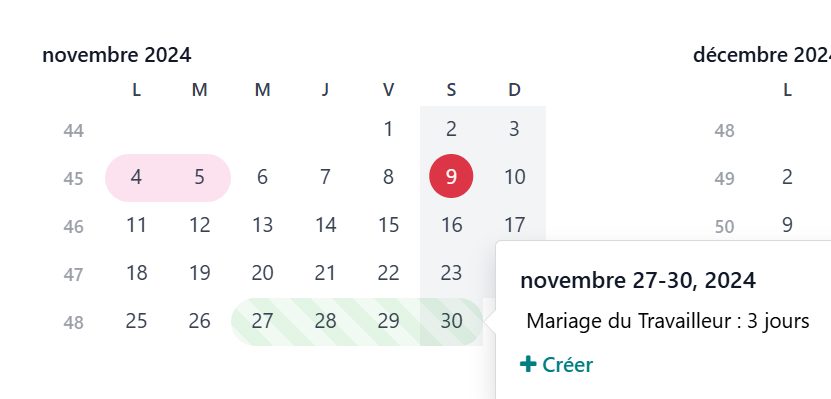
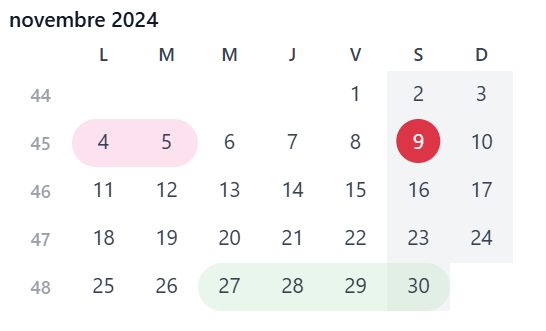
Here they have booked 4 days, but as the Saturday is a holiday only 3 days are counted. Once the dates are booked, an approval request goes to their manager, who accepts or refuses it.

Once the manager has accepted the leave, it is no longer hatched but shown in solid colour:
Sick leave requests
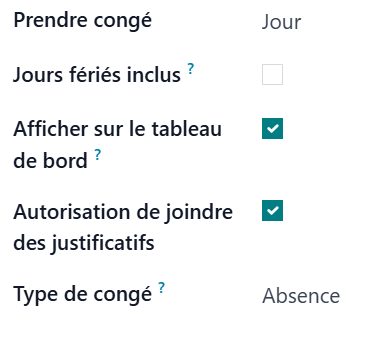
For sick leave you can let the employee make the request themselves, requiring them to attach a certificate.
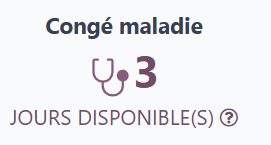
Once the request is accepted, the allocation appears on their dashboard:
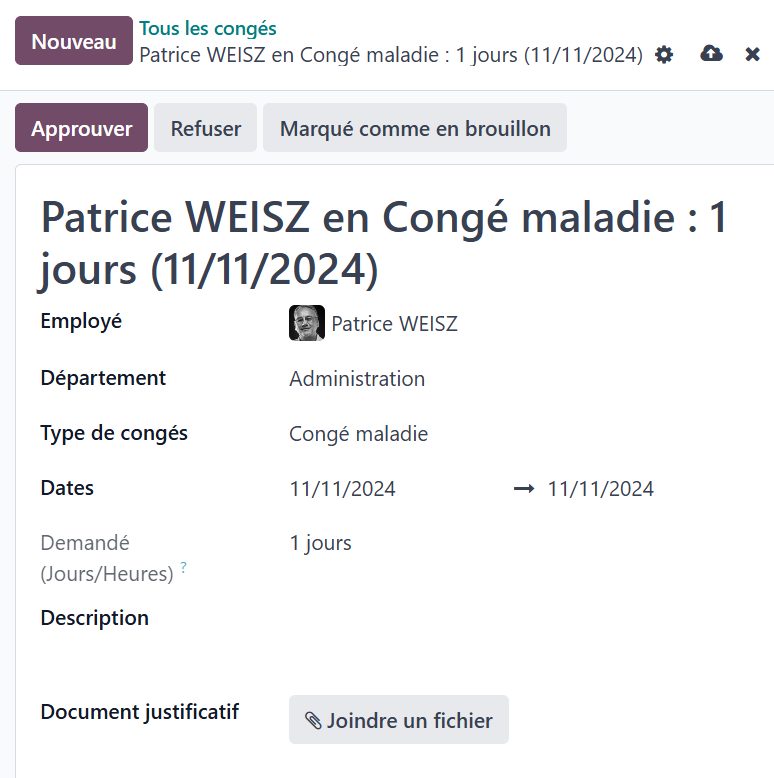
But the manager can also create the sick leave request for the employee and attach the certificate they were sent.
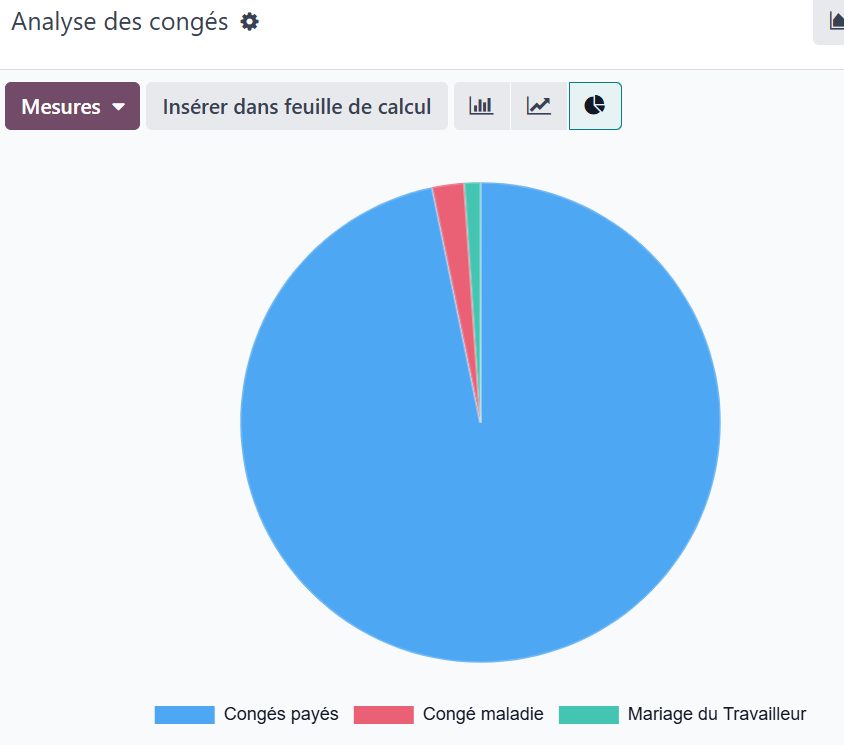
That is how staff absences are managed, and later analysed to spot any abuse.
The Time Off module has other features, but we hope to have shown you a few of them here — and above all to have shown that with Odoo, managing leave is child's play.
And there you are.
We hope this small example has shown you how easy Odoo is to use, and how much it can do.
If you would like to know Odoo better, or if you are thinking of deploying this fine tool in your organisation, do get in touch with one of our experts using the "Get in touch" button at the top of this page.