
Supplier invoices
Paperless supplier invoices
Automatic invoice recognition, from the mailbox to the journal entry.
Translated from the French original. The screenshots show Odoo in French, as our Senegalese clients use it.
Introduction
A paperless company? Wishful thinking?
Here is a piece of advice: every time a supplier drops an invoice off, ask them to e-mail it to you as a PDF as well. It then arrives already digitised, and they carry part of the effort. After all, you are going to pay them — they can do you that small favour. Ask it of every supplier. File the paper away as it comes and work only on the digital twin: files do not get lost, do not get damaged, do not get rained on, and the data they hold can be processed electronically, very efficiently, with very little human intervention.
Invoice automation driven by AI
ERPs such as Odoo can now literally read your PDF invoices and enter them for you from that intelligent decoding.
It has to be said that a document like a supplier invoice follows an illogical path: it is typed on a computer, printed on paper for signature and delivery, then scanned or keyed into accounting software on yet another computer. Sending a file straight from one computer to the other would seem more rational. Sadly we are not there yet.
Banks abroad are already moving: Odoo can connect directly to the company's bank account (more than 35,000 foreign financial institutions are already connected) to import statements in real time as digital data, with no re-keying and no exporting and re-importing a file of entries by hand. Bank reconciliation then becomes automatable, which saves precious time and removes both the drudgery and the inevitable mistakes. But that deserves an article of its own.
Standards are appearing for putting barcodes or QR codes on invoices generated by the supplier's software, and for signing documents with secure signatures. But a fall in paper and printer sales is not on the cards yet: the law will require this physical trail for some time, and judges prefer paper they can hold, with smudged stamps and signatures pressed hard in blue ballpoint. It is probably a generational constraint.
It looks like a guarantee of authenticity, even though forging a physical document is now easier than cracking the cryptographic keys that protect a digital file — witness the rise of blockchain and of tamper-proof cryptocurrencies such as Bitcoin.
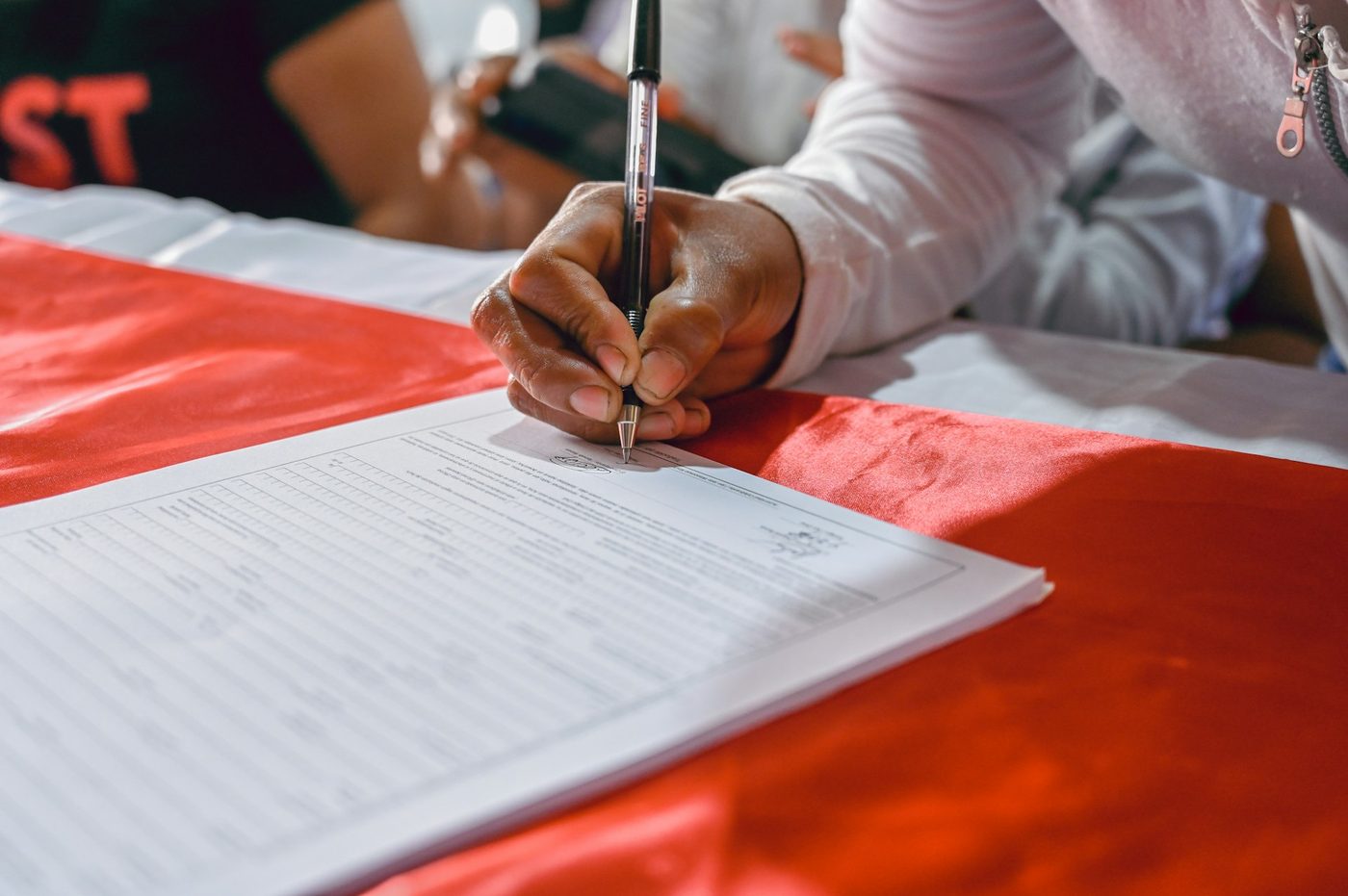
Until compulsory paper ends, though, there are effective digitisation solutions within easy reach. You simply have to keep handling the paper flow on one side and the digital data flow alongside it — two redundant flows for one purpose — when it is plain that intelligent use of data (BI) will only ever be possible from the digital flow.
You have probably heard of OCR (optical character recognition): some scanners carry software able to turn a sheet of paper or a PDF into a Word or Excel file a computer can work with.
Odoo uses that technique and has added artificial intelligence on top, so the software can read invoices and pull out the supplier's name, the invoice date and everything else accounting needs — the net amount, the VAT, and so on.
Pricing
Invoice digitisation is an In-App Purchase (IAP) service and needs prepaid credits to run. Each document scanned uses one credit. In Senegal, having an invoice read by the AI costs around 100 CFA, a modest sum for the service rendered. If you use Odoo Online with the Enterprise edition, you get free trial credits to test the feature.
To buy credits, go to Accounting ‣ Configuration ‣ Settings ‣ Digitization and click "Buy credits", or go to Settings ‣ Odoo IAP and choose "View my services".
How does it work?
The first step isReceiving a supplier invoice
It can be imported from a scanner or a hard drive, sent by a scanner to a mail alias, or forwarded to that alias from your mailbox.
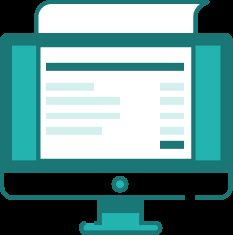
A draft invoice is created
From what it has recognised, Odoo fills in a new electronic supplier invoice directly — the supplier's name, the date, the net amount, the VAT and so on.
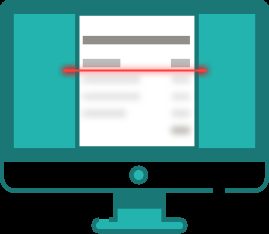
Your validation
(Before validating, correct anything Odoo got wrong. It will take account of your corrections next time.)

In short: supplier invoice forms are created and filled in automatically from the scanned invoices.
The keying disappears.
Invoice processing driven by Odoo's AI helps you become a paperless company. Not only is the data handled far faster, so is collecting the documents. You can scan your supplier invoices with Odoo's mobile app, send them straight to your database by e-mail, or even scan hundreds of invoices at once and let Odoo Documents process them in batches.
Generating the supplier invoices yourself
In Odoo, if you are the one issuing the purchase order from the Purchase module — to order goods you will then receive, for instance — the process is simpler still: from the purchase order you can generate the electronic supplier invoice directly and attach the one you received to it. One click is enough to create the invoice.
Usually you generate that supplier invoice after validating the goods receipt, so that any shortfall can be taken into account if the delivery was incomplete.
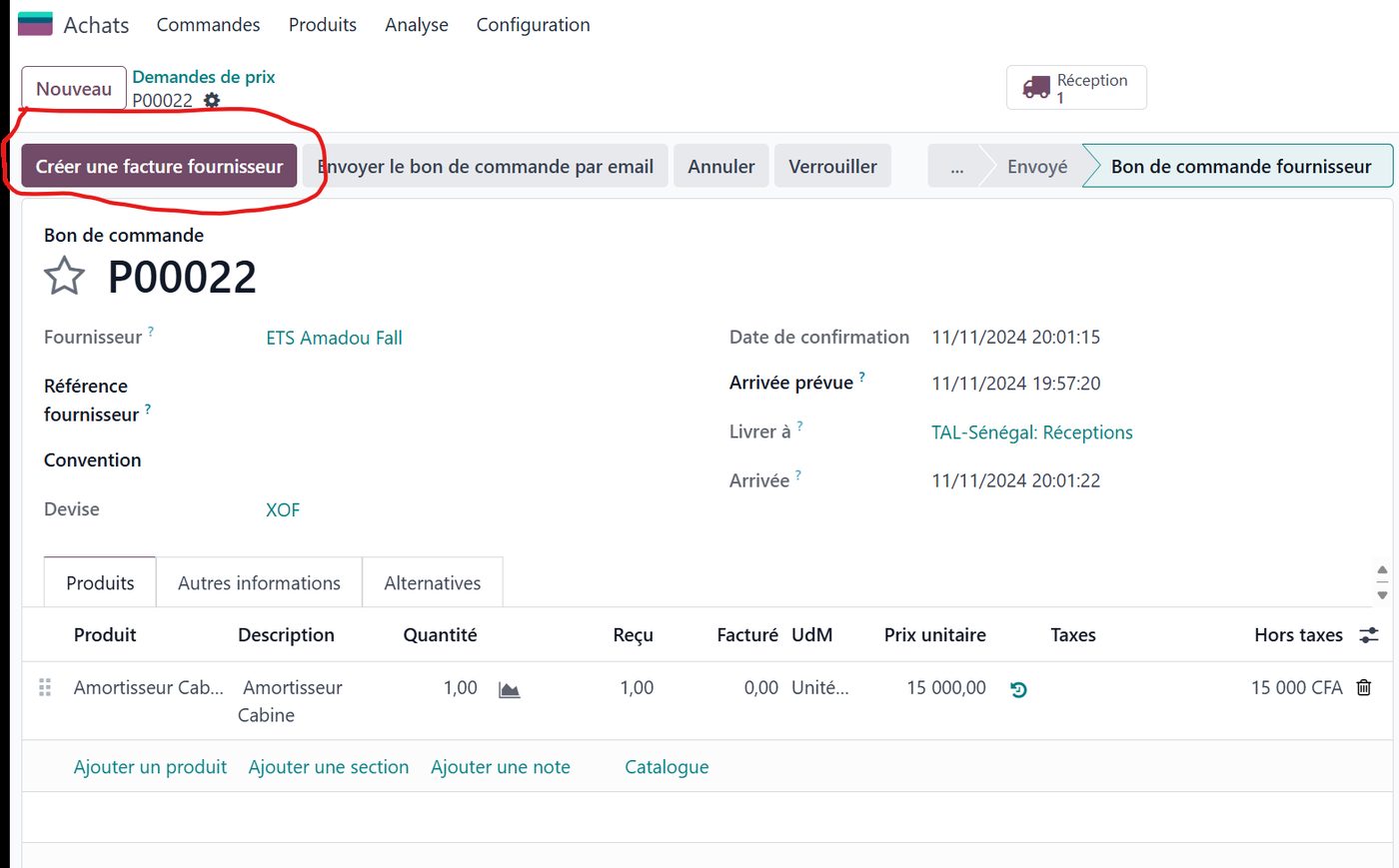
Once validated, that supplier invoice will post every accounting entry needed (it creates the journal entry) straight into the accounting module, moving the matching purchase, partner and tax accounts.
In this case you stay entirely inside Odoo's digital flow. The invoice issued by the supplier, e-mailed as a PDF, is there only for checking and proof, and is attached to the electronic invoice. You will also find that document in the Documents module, where the digital twins of the paper versions are stored online.
And there you are.
In this article we have seen how to digitise your supplier invoices and what it gains you in speed and in handling. This is part of what digital transformation means for an organisation.
The future has to be prepared for.
Tomorrow, turning an invoice into paper — a heavy step, and a costly one for the environment — will disappear. The authenticity of a secured electronic file will replace paper proof, which will have become superfluous. There will be nothing left to digitise, because only digital information will travel: from client to supplier, from bank to client, from the company or the taxpayer to the state's departments, and of course inside the organisation itself. Once the sinew of war, money, has become immaterial, every proof of a monetary transaction will inevitably follow.
Until then, digitising feeds the whole company's digital processing as well as it can be fed. It also stores the data those invoices hold in a database, ready to feed analyses and dashboards in Odoo without re-keying anything into Excel or into a third-party reporting tool.
Once the data is in Odoo, Odoo can carry it through to the end without changing application. Time saved, efficiency gained, data secured and put to intelligent use: it is all there, within reach.
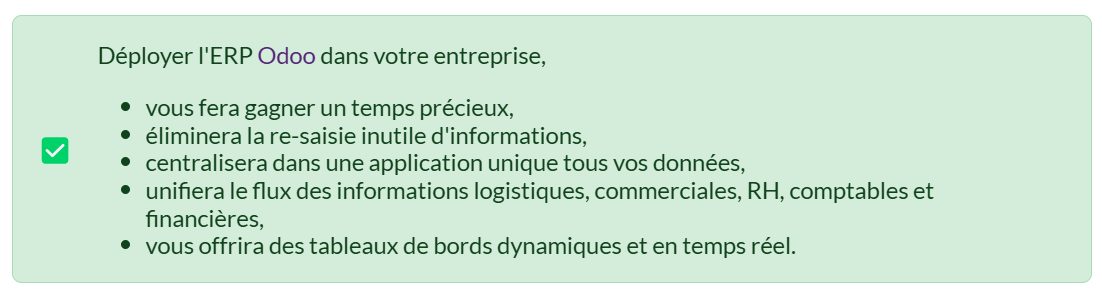
If you would like to know Odoo better, or if you are thinking of deploying this fine tool in your organisation, do get in touch with one of our experts using the "Get in touch" button at the top of this page.